
Northeast Indiana and the Fort Wayne metropolitan area stand out as a manufacturing powerhouse, an industrial city that continues to punch above its weight in both food and primary metal manufacturing.
Global Location Strategies (GLS), an international corporate location strategy and economic development consulting firm, recently completed two important 2025 GLS Insights reports for Food Manufacturing and Primary Metals Manufacturing. Fort Wayne ranks among the nation’s most competitive metros, offering a rare blend of high-quality infrastructure, skilled workforce, and low operating costs. Not just within the East North Central region (think Great Lakes Region), but compared to other metropolitan areas nationally.
In the GLS composite model, metros are evaluated based on two key dimensions: location quality score and location-dependent operating cost. The most desirable metros fall into Quadrant I-Preferred Locations, where high quality meets affordability. Fort Wayne is firmly planted in this quadrant across both food and metal manufacturing sectors, making it a strategic gem for companies seeking long-term operational success.
In food manufacturing, Fort Wayne ranks No. 4 in the East North Central region and is tied for No. 21 nationally, with a location quality score of 83.37. While it saw a slight dip from its previous No. 1 regional position, it remains one of the top-performing metros in a region that attracted 25% of all U.S. food manufacturing projects between 2023 and 2024. This reflects Fort Wayne’s enduring strength in workforce availability, logistics infrastructure, and cost competitiveness—especially in high-growth subsectors like animal food and dairy products.
In primary metal manufacturing, Fort Wayne shines even brighter. It ranks No. 2 in the East North Central region and No. 6 nationally, with a score of 92.03, maintaining its position from the previous year. This consistency underscores Fort Wayne’s robust industry ecosystem and its ability to support capital-intensive operations. The East North Central region itself accounted for 15% of all U.S. primary metal manufacturing projects in 2024, with Fort Wayne leading the charge in sectors like steel products and aluminum processing.
What sets Fort Wayne apart is its ability to deliver high performance without high costs. In both reports, it is highlighted as a metro that offers above-average quality at below-average operating cost. For site selectors and investors, this means Fort Wayne is not just a good choice, it’s a smart one. It offers the kind of cost-quality balance that de-risks investment, supports scalability, and fosters long-term resilience.
As of May 2025, Indiana ranks second in the nation for manufacturing jobs per capita, with 792 jobs for every 10,000 residents, according to Lightcast. In total, the state is home to more than 523,000 manufacturing jobs and has seen 5% growth in the manufacturing sector since 2014.
In a complementary study of manufacturing, around 26% of Indiana’s GDP, meaning over a quarter of our economic output, comes from industries like steel, automotive, machinery, and food production. This is a wide and resilient base helping to keep our economy balanced and adaptable.
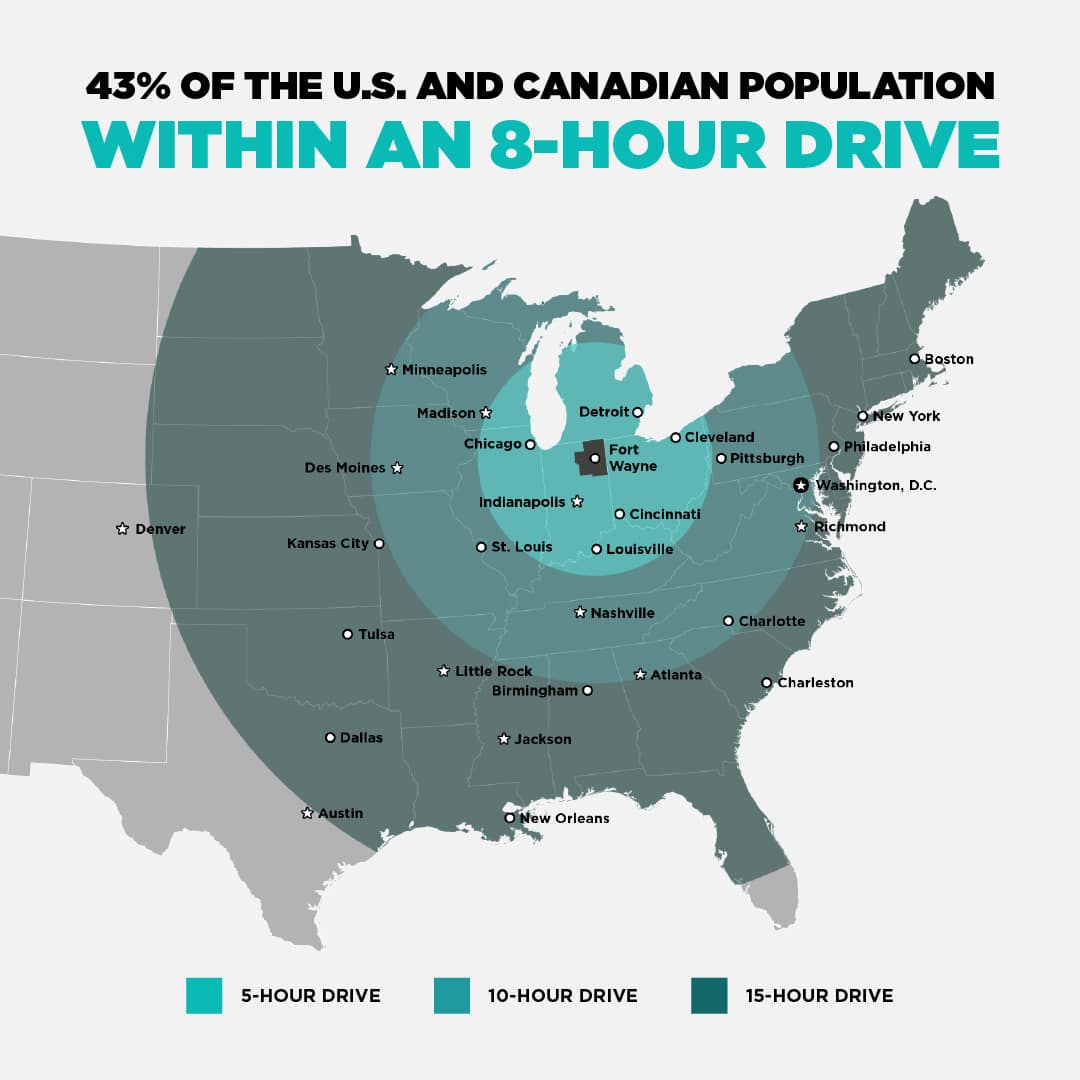
The Midwest and Great Lakes dominate this list, and none of the top ten states have fewer manufacturing jobs now than they did in 2014. Over the past decade, the sector has experienced consistent growth, reinforcing the importance of manufacturing to regional and national economies, with Northeast Indiana in a prime location for continued growth and dominance.
In a landscape where manufacturing competitiveness is increasingly shaped by automation, energy costs, and workforce dynamics, Fort Wayne continues to lead. It’s not just part of the Great Lakes manufacturing corridor, it’s helping define it. This concentration of industrial employment reflects more than just tradition. It highlights how essential manufacturing is to Indiana’s identity, workforce, and future.
Want to be the first to know about what is going on at NEI and our region? Sign up for the NEI Newsletter and Blog below.